Discussion around a possible $2,000 federal payment in February 2026 has gained momentum across social media, video platforms, and news-style blogs. With household budgets still under pressure from higher living costs, even the idea of additional financial support has captured widespread attention. At the same time, the information circulating online is mixed, and in many cases, misleading.
This article breaks down what is currently known, what has not been officially approved, and how people can stay informed and prepared without relying on rumors.
Why Talk of a $2,000 Federal Payment Is Spreading

Public interest in a potential $2,000 payment is closely tied to ongoing economic concerns. Inflation, housing expenses, healthcare costs, and everyday essentials continue to strain household finances. Over the past several years, Americans have seen various government relief programs introduced during periods of economic stress.
Because of that history, any discussion of federal support quickly sparks comparisons to earlier stimulus-style payments. As soon as policy debates or proposals surface, they often spread online as if approval is already guaranteed. In reality, discussion and approval are very different stages.
Current Approval Status of the February 2026 Payment
As of now, there is no confirmed federal approval for a nationwide $2,000 payment scheduled for February 2026. No legislation has been passed, no funding has been finalized, and no federal agency has issued an official announcement confirming such a program.
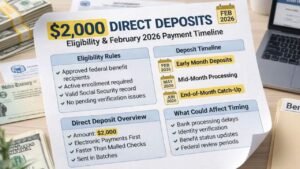
Large-scale federal payments require several steps before becoming reality. Congress must authorize the program through legislation, funding must be approved, and agencies must establish eligibility rules and distribution plans. Until these steps are completed and formally announced, the payment remains speculative.
How Federal Relief Payments Typically Work
When federal relief payments have been approved in the past, they generally follow a structured process designed to reach eligible recipients efficiently.
Legislative Approval Comes First
A relief payment begins with a bill passed by lawmakers. This bill outlines the payment amount, who qualifies, and how funds will be distributed. Without this step, no payment can legally move forward.
Automatic Distribution Using Existing Records

Once approved, agencies typically rely on existing tax and benefit records to identify eligible individuals. Payments are issued automatically using information already on file, such as bank account details or mailing addresses.
Most recipients do not need to submit a separate application. Eligibility is usually determined based on recent tax returns or enrollment in federal benefit programs.
Who Could Qualify If a Payment Is Approved
If a $2,000 payment is eventually authorized, eligibility would likely follow patterns seen in previous federal relief programs.
Likely Eligibility Factors
While nothing is final, past programs suggest that eligibility could include:
- Income limits focused on low- and middle-income households
- Retirees receiving Social Security or other federal benefits
- Individuals receiving disability-related benefits
- Taxpayers who file federal tax returns within certain income ranges
The exact criteria would depend entirely on the final legislation. Until official rules are published, any eligibility lists shared online should be viewed as estimates, not guarantees.
Possible Timing and Payment Methods
February 2026 is frequently mentioned as a possible timeframe, but timelines often shift during the legislative and rollout process. Even after approval, payments are rarely issued all at once.
Common Delivery Methods
If approved, payments would likely be distributed in stages:
- Direct deposit would typically be sent first, as it is the fastest method
- Paper checks would follow for those without banking information on file
- Prepaid debit cards may be used in some cases
Processing times can vary depending on record accuracy, payment volume, and administrative capacity.
Will People Need to Apply for the Payment?
In many previous relief programs, most eligible individuals did not need to apply separately. Payments were sent automatically using tax and benefit records already held by federal agencies.
However, people who do not regularly file tax returns or who have outdated personal information may need to update their records to avoid delays. While no application process has been announced, staying prepared is still important.
Why Keeping Personal Records Updated Matters
Accurate personal information plays a major role in payment delivery. Incorrect bank details or outdated mailing addresses can cause payments to be delayed or returned.
Maintaining updated records helps ensure smoother processing not only for potential relief payments, but also for tax refunds and ongoing benefits. Filing taxes on time and reviewing personal information regularly are practical steps regardless of whether a new payment is approved.
Scam Risks Increase When Payment Rumors Circulate
Whenever rumors about government payments gain attention, scam activity tends to rise. Fraudsters often exploit uncertainty by sending messages that promise guaranteed payments in exchange for personal or financial information.
Common Warning Signs
- Requests for banking details through texts or emails
- Claims that a fee is required to release funds
- Urgent messages pushing immediate action
Legitimate government agencies do not charge fees to issue payments and do not request sensitive information through unsolicited messages. Relying on official announcements is the safest approach.
Why So Many People Are Watching Closely
The interest in a potential $2,000 payment reflects real financial pressure faced by many households. Even a one-time payment could help cover rent, utilities, groceries, insurance premiums, or medical expenses.
Temporary support can ease short-term stress, which is why the topic continues to attract attention. Still, hope should not replace confirmation, and financial decisions should not be based on unapproved programs.
How to Stay Properly Informed
The most reliable way to track developments is through official government statements and well-established news organizations. Approved programs are always announced publicly with clear eligibility rules and timelines.
Depending on viral posts or forwarded messages increases the risk of misinformation. Verifying updates through official channels protects both finances and personal data.
Preparing Without Relying on Unconfirmed Payments
People can take sensible steps without assuming the payment will happen. Filing taxes on time, choosing direct deposit, reviewing benefit information, and planning budgets conservatively are all beneficial actions.
Treating the proposed payment as uncertain helps avoid disappointment and financial risk. Preparation, rather than expectation, is the safest approach.
The Bottom Line
There is currently no confirmed $2,000 federal payment scheduled for February 2026. While discussions and proposals may be circulating, official approval has not been announced. If a payment is eventually authorized, clear guidance will be released through formal government channels.
Until then, staying informed, avoiding scams, and keeping personal records updated are the most practical steps individuals can take. Understanding the difference between discussion and confirmation helps set realistic expectations in an uncertain financial landscape.