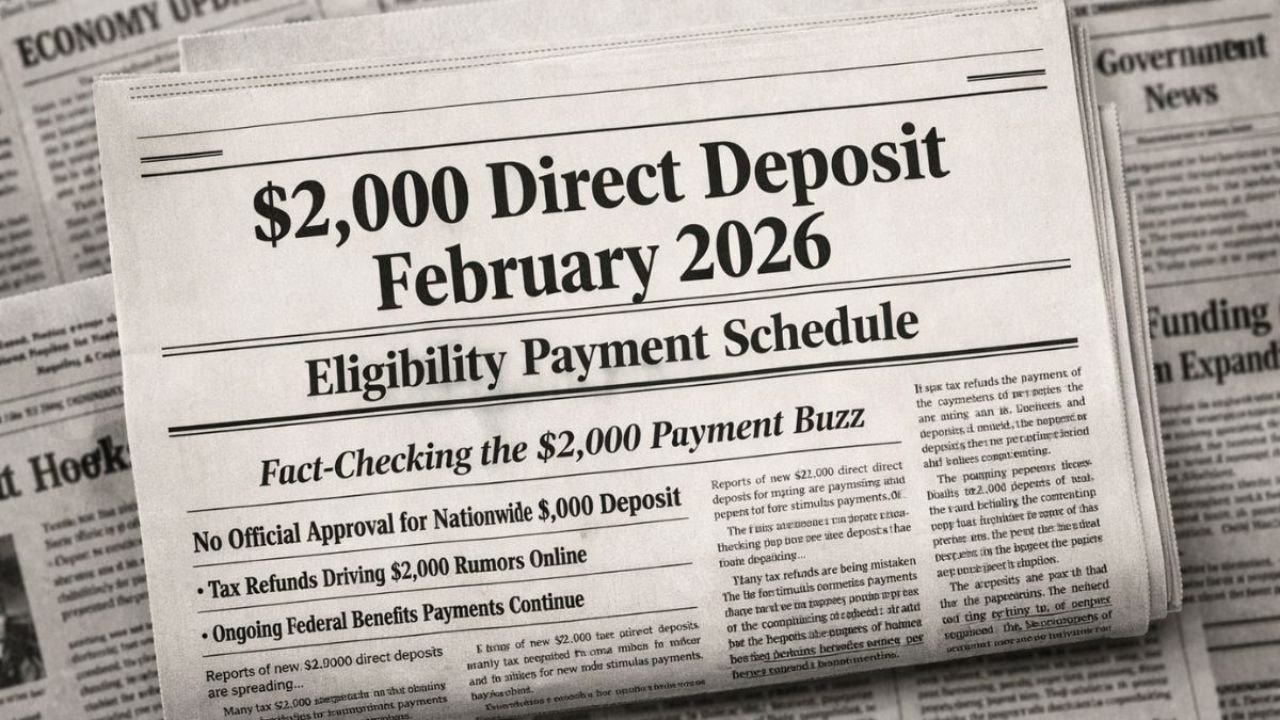
In February 2026, conversations about a $2,000 federal direct deposit have surged across digital platforms. Headlines, social posts, and short-form videos suggest that a new nationwide payment is on its way. For households managing elevated costs in housing, food, healthcare, and insurance, the idea of extra funds is understandably appealing.
However, clarity is essential. As of now, no universal $2,000 federal direct deposit has been officially approved for all Americans in February 2026. Understanding where the $2,000 figure is coming from — and how federal payments truly work — can help you separate fact from speculation.
No Official Approval for a Nationwide $2,000 Payment

Large-scale federal payments do not happen quietly. They require:
- Congressional legislation
- Presidential approval
- Formal implementation by federal agencies
Without this process, agencies such as the IRS or Social Security Administration cannot release nationwide stimulus-style payments.
At this time, there has been no confirmed law authorizing a new $2,000 direct deposit for every American household in February 2026. Any legitimate federal payment program would be widely announced through official government channels.
Why the $2,000 Amount Keeps Appearing
If there is no new stimulus check, why does $2,000 keep showing up online?
Tax Refund Season Is the Main Reason
February is one of the busiest months for IRS tax refunds. Many early filers receive refunds ranging between $1,500 and $3,000, depending on:
- Income level
- Filing status
- Tax credits claimed
- Amount of federal withholding
Refunds that land near $2,000 are common, particularly for families claiming refundable credits such as:
- Child Tax Credit
- Earned Income Tax Credit (EITC)
- Education-related credits

When refund screenshots are shared online without context, they can easily be mistaken for a special federal payment.
Overlapping Deposits Add to Confusion
Some individuals may receive multiple deposits around the same time, such as:
- An IRS tax refund
- A Social Security payment
- A veterans’ benefit
When these deposits arrive within days of each other, it can create the impression of a new relief payment — even though the funds are part of existing programs.
Federal Payments That Are Actually Being Issued
While there is no new universal $2,000 deposit, several legitimate payments are being distributed in February 2026.
IRS Tax Refunds
The IRS began processing 2025 tax returns in late January. For taxpayers who:
- File electronically
- Choose direct deposit
- Have no filing errors
Refunds typically arrive within approximately 21 days after acceptance.
Paper returns generally take longer to process.
Social Security and Disability Benefits
Ongoing federal benefit programs continue on their standard schedules, including:
- Social Security retirement benefits
- Social Security Disability Insurance (SSDI)
- Supplemental Security Income (SSI)
- Veterans Affairs compensation
These are recurring monthly payments based on eligibility and earnings history — not one-time relief deposits.
How Federal Payment Processing Works
Understanding how federal systems operate can reduce confusion.
When a payment program exists, agencies follow structured steps:
- Identity verification
- Income validation
- Eligibility screening
- Bank account confirmation
- Batch release processing
Payments are often distributed in waves rather than all at once. Direct deposit recipients typically receive funds first, followed by prepaid debit cards or mailed checks when necessary.
Incorrect banking information is one of the most common causes of payment delays.
How to Protect Yourself From Payment Scams
Whenever rumors about government money circulate, fraudulent activity increases. Scammers may attempt to:
- Send fake approval messages
- Request personal or banking details
- Charge “processing fees” to release funds
Important reminders:
- Federal agencies do not request sensitive information through unsolicited texts or emails.
- No legitimate government payment requires a fee to receive it.
- Always verify information through official government websites.
If a message pressures you to act urgently or provide private information, it is likely a scam.
Setting Realistic Expectations for February 2026
The key takeaway is simple: there is no confirmed nationwide $2,000 direct deposit program for February 2026. Deposits around that amount are largely the result of:
- Routine IRS tax refunds
- Standard Social Security or disability payments
- Veterans’ benefit distributions
Understanding this distinction allows households to plan responsibly rather than relying on unverified claims.
Smart Financial Steps Right Now
While monitoring official updates, consider taking practical actions:
- File tax returns accurately and early if expecting a refund
- Ensure bank account details are current
- Monitor official IRS or SSA online accounts
- Avoid budgeting based on unconfirmed payments
Being proactive reduces stress and prevents unnecessary financial risk.
Final Thoughts
Financial rumors can travel quickly, especially when they involve direct deposits. The February 2026 $2,000 discussion highlights how easily routine tax refunds and scheduled benefit payments can be misunderstood as new stimulus programs.
Reliable information is the best safeguard against disappointment and fraud. Until an official announcement confirms otherwise, the $2,000 deposits appearing this month are tied to existing federal programs — not a newly approved nationwide payment.
Staying informed through verified government sources ensures that your financial decisions are based on facts, not speculation.