
In recent weeks, discussion surrounding a potential $2,000 federal direct deposit in February 2026 has gained significant traction online. Headlines, social media posts, and financial forums are fueling questions about whether new federal relief is on the way.
For many households, the interest is understandable. While inflation has cooled compared to peak levels in prior years, everyday expenses remain elevated. Housing, groceries, healthcare, insurance premiums, and utility costs continue to strain monthly budgets. Any suggestion of federal financial support naturally attracts attention.

However, understanding what is being discussed — and what has not been officially confirmed — is essential for making informed financial decisions.
How This Would Differ From Pandemic Stimulus Payments
During the pandemic, federal stimulus checks were designed as emergency economic stabilization tools. They were broad, fast-moving, and aimed at supporting a large portion of the population during an unprecedented shutdown.
The reported February 2026 payment, however, is being described in a different context.
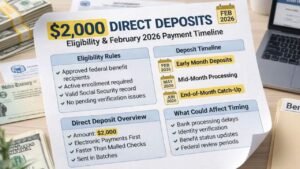
Instead of a universal stimulus program, discussions suggest a more targeted form of financial assistance. Rather than launching a brand-new emergency initiative, the concept reportedly involves using existing federal payment systems — such as tax refund channels and federal benefit networks — to distribute funds efficiently.
This distinction matters. A targeted payment model typically relies on existing income records and eligibility data, rather than issuing blanket payments to nearly all adults.
Why Financial Relief Is Still a Policy Topic in 2026
A common question is why federal financial relief would even be considered when inflation rates have slowed.

The answer lies in the difference between inflation slowing and prices declining. Lower inflation simply means prices are rising at a slower pace — not that they have returned to previous levels.
Many households are still adjusting to:
- Elevated rental and mortgage costs
- Higher grocery bills compared to pre-inflation years
- Increased health insurance and medical expenses
- Rising transportation and utility costs
Even modest cost increases can compound over time, particularly for retirees, fixed-income households, and lower-to-moderate income workers. Policymakers often evaluate these pressures when discussing targeted support measures.
If implemented, a $2,000 direct deposit would likely be framed as temporary relief aimed at easing ongoing financial strain rather than responding to an economic emergency.
Which Systems Would Handle the Payment
If approved, the payment would almost certainly be distributed through systems already in place.
Federal agencies currently send millions of payments each month through:
- Direct deposit via IRS tax refund systems
- Social Security and federal benefit networks
- Veterans’ payment systems
- Treasury-managed electronic transfers
Using established infrastructure would reduce administrative complexity and minimize delays. It would also lower the risk of duplicate payments or large-scale processing errors.
Because these systems are tied to verified income records and benefit enrollment data, eligibility could be determined using existing databases instead of requiring a new nationwide application process.
Who Might Qualify Under a Targeted Model
While no final eligibility criteria have been officially confirmed, discussions suggest the payment would likely be income-based rather than universal.
Groups that could potentially be reviewed for eligibility include:
- Recent federal tax filers with qualifying income levels
- Social Security retirement beneficiaries
- Social Security Disability Insurance recipients
- Supplemental Security Income recipients
- Veterans receiving federal benefits
- Lower and moderate income workers
Higher-income households could see phased-out amounts or may not qualify at all, depending on income thresholds established in any formal proposal.
Targeted relief programs in the past have used adjusted gross income data from recent tax filings to determine eligibility. If a similar structure were used here, up-to-date tax records would likely play a central role.
How Payment Delivery Would Likely Work
Electronic payment would almost certainly be prioritized.
Direct deposit is typically the fastest and most secure method of distributing federal funds. Individuals who already have valid bank account information on file through tax returns or benefit programs would likely receive funds first.
For individuals without current banking details on file, alternative delivery options may include:
- Mailed paper checks
- Prepaid government-issued debit cards
Historically, these alternative methods take longer to process and deliver. Differences in arrival dates are usually tied to payment method rather than eligibility status.
Keeping financial and mailing information current in official government systems is one of the most practical ways to avoid unnecessary delays.
Steps Individuals Can Take Now
Even though the payment has not been officially approved, there are proactive steps individuals can take to ensure readiness should any program move forward.
File Missing Tax Returns
Recent tax records are often central to income-based eligibility reviews. Filing outstanding returns can prevent eligibility complications.
Update Banking Information
If your bank account has changed recently, ensuring that updated information is on file with the IRS or relevant federal benefit agency can prevent payment disruptions.
Verify Mailing Address Accuracy
Incorrect or outdated mailing addresses are one of the most common causes of delayed paper checks or debit cards.
Stay Alert to Scams
Whenever high-profile federal payments are discussed, fraudulent messages tend to increase. Individuals should avoid clicking suspicious links, sharing personal information, or responding to unofficial emails or phone calls.
Only verified government websites and official announcements should be considered reliable sources of information.
Potential Economic Impact of a Targeted $2,000 Payment
If implemented, a targeted direct deposit of this size could provide short-term financial relief for qualifying households.
Most families tend to allocate relief funds toward essential expenses first, including:
- Rent or mortgage payments
- Groceries and household necessities
- Utility bills
- Transportation costs
- Medical expenses
This type of spending typically flows quickly back into the broader economy, supporting local businesses and service providers. However, because the reported proposal appears targeted rather than universal, the overall macroeconomic impact would likely be more moderate than earlier large-scale stimulus rounds.
Current Status and Public Expectations
At present, public discussion is outpacing confirmed policy action. While reports and online commentary suggest a $2,000 federal direct deposit may be under consideration, there has been no final approval or official nationwide confirmation.
Payment amounts, income limits, eligibility categories, and timelines could shift significantly during policy review and authorization stages — or the proposal may not move forward at all.
For this reason, individuals should approach early reports cautiously. Financial planning decisions should not be based solely on preliminary discussions.
Monitoring official government announcements remains the most reliable way to stay accurately informed.
Final Thoughts
The idea of a $2,000 federal direct deposit in February 2026 has generated understandable interest amid ongoing cost pressures. While the discussion centers on targeted financial support rather than broad stimulus, important details remain unconfirmed.
For now, preparation and awareness are more valuable than speculation. Keeping records current, staying informed through official channels, and avoiding misinformation are practical steps individuals can take while waiting for verified updates.
Disclaimer: This article is for informational purposes only. As of now, there is no official confirmation of a $2,000 federal direct deposit for February 2026. Eligibility rules, payment amounts, and timelines may change or may not be implemented. Readers should rely on official government sources for the most accurate and up-to-date information.