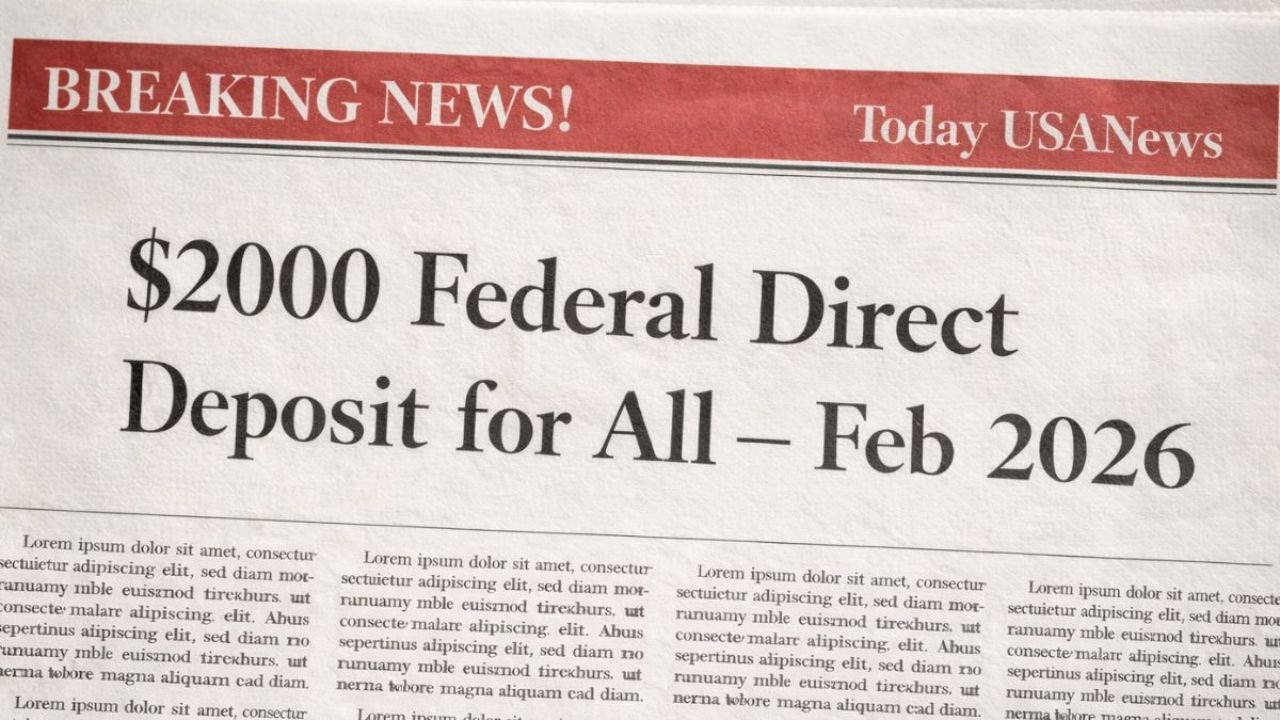
In February 2026, conversations about a $2,000 federal direct deposit have gained serious traction online. Social feeds, video platforms, and discussion forums are filled with claims that a new nationwide payment has been approved. For households managing higher living costs, the idea of extra financial support is understandably appealing.
However, clarity matters. There is currently no officially approved universal $2,000 stimulus payment scheduled for February 2026. The deposits people are referencing largely relate to tax refunds and ongoing federal benefit programs. Understanding the difference helps you plan wisely and avoid misinformation.
Why the $2,000 Payment Rumor Is Gaining Attention

Financial pressure remains a reality for many Americans. Rising housing costs, food prices, healthcare expenses, and insurance premiums have made budgeting tighter than ever. When a specific dollar amount like $2,000 starts trending, it naturally sparks hope.
Online discussions often blur the line between:
- Regular tax refunds
- Monthly Social Security or SSDI payments
- Veterans’ benefits
- Rumors of new stimulus checks
Because many legitimate payments can total around $2,000, screenshots and personal posts can easily be misunderstood as proof of a new federal program.
No Official Nationwide $2,000 Stimulus Approved

Large-scale federal payments require:
- Congressional approval
- Signed legislation
- Formal agency implementation
As of February 2026, no such law has been passed authorizing a universal $2,000 direct deposit. Federal agencies cannot issue nationwide payments without legal authorization.
Any claim suggesting that a brand-new stimulus check has already been approved should be verified through official government announcements before being considered reliable.
The Real Source of $2,000 Deposits

The $2,000 figure is appearing frequently for practical reasons.
IRS Tax Refund Season
February is a peak month for tax refunds. The IRS typically begins processing returns in late January. Many early filers receive refunds within approximately 21 days when they:
- File electronically
- Choose direct deposit
- Have no errors or review flags
For households claiming refundable credits, refunds often fall between $1,500 and $3,000, making $2,000 a very common number.
Refunds May Be Higher If You Qualify For:
- Child Tax Credit
- Earned Income Tax Credit (EITC)
- Education credits
- Over-withholding during the year
These refunds are not stimulus payments — they are returns of overpaid taxes or refundable credits.
Social Security and Disability Benefits
Monthly federal benefits can also approach or exceed $2,000 depending on eligibility.
Social Security Retirement Benefits
Payments depend on:
- Lifetime earnings
- Age at retirement
- Annual COLA adjustments
Many retirees with strong work histories receive benefits near or above $2,000 per month.
SSDI (Social Security Disability Insurance)
SSDI payments are based on prior earnings and approved disability status.
Veterans’ Benefits
VA compensation varies depending on disability rating and service history. Some recipients may receive amounts in the same range.
These are structured monthly payments — not one-time relief deposits.
February 2026 Payment Timing
Understanding payment schedules eliminates confusion.
IRS Refund Timeline
- Tax season opens: Late January
- E-file processing: Up to 21 days
- Direct deposit: Faster than paper checks
Paper returns can take significantly longer.
Social Security Schedule
Payments are distributed based on birth dates:
- 1st–10th: Second Wednesday
- 11th–20th: Third Wednesday
- 21st–31st: Fourth Wednesday
SSI payments are generally sent on the first of each month, unless adjusted for weekends or holidays.
Veterans’ benefits follow a separate fixed monthly calendar.
Why Misinformation Spreads Quickly
Financial news travels fast — especially when it involves direct deposits. Social platforms amplify partial information, and speculation often appears convincing when supported by personal anecdotes.
The problem is that:
- A tax refund screenshot looks like a stimulus check
- A regular Social Security payment can be mistaken for bonus relief
- Combined deposits in one month may create confusion
Without context, it becomes easy to assume a new federal program exists.
Protecting Yourself From Payment Scams
Whenever rumors of federal money circulate, scams increase.
Fraudsters may:
- Send messages promising faster access to funds
- Ask for bank details to “release” payments
- Create fake websites imitating government portals
Important reminders:
- Federal agencies do not charge fees to issue payments
- They do not request sensitive details through social media
- Official updates come only from verified government websites
Never share your Social Security number or banking information through unofficial links.
Who Could Realistically Receive Around $2,000?
You may see a deposit close to $2,000 in February if you:
- Filed your tax return early and qualified for credits
- Receive higher-tier Social Security retirement benefits
- Collect SSDI based on strong earnings history
- Receive VA disability compensation at certain levels
- Receive multiple payments within the same month
However, eligibility is individual — not universal.
The Bigger Picture: Could New Relief Happen?
Economic relief programs are always possible, especially during periods of economic strain. However, broad stimulus checks typically occur during severe national emergencies.
At this time, there is no confirmed federal plan for a new blanket $2,000 payment.
Any future program would involve public debate, formal legislation, and widespread official reporting.
Final Reality Check for February 2026
There is no nationwide $2,000 federal direct deposit approved for February 2026. Deposits around that amount are largely tied to tax refunds and ongoing federal benefit programs.
The smartest financial move right now is simple:
- Verify payment status through official IRS or Social Security accounts
- File taxes accurately and early if expecting a refund
- Keep direct deposit information updated
- Avoid reacting to unverified social media claims
Clear information protects your financial planning and reduces unnecessary stress.
Staying informed through trusted sources ensures that when legitimate programs are announced, you’ll know — without relying on rumors.